
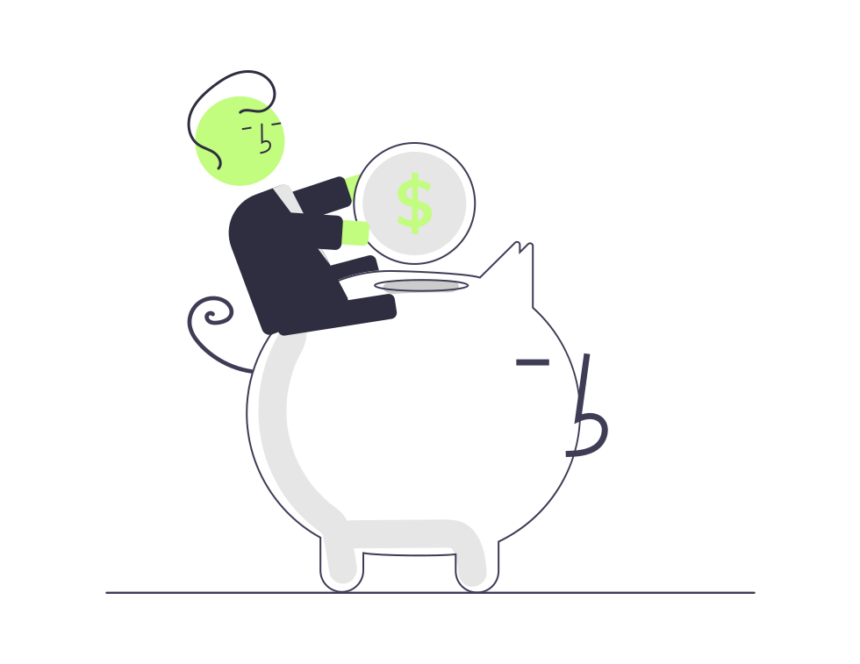
Have you ever wondered why putting aside a few pennies here and there feels much easier than trying to save a big chunk of your paycheck?
Well, you’re not alone. This little micro-saving trick isn’t just a fad – some cool psychology backs it. Let’s dive into why micro-saving works so well for our brains and wallets.
The Psychology Behind Micro-Saving
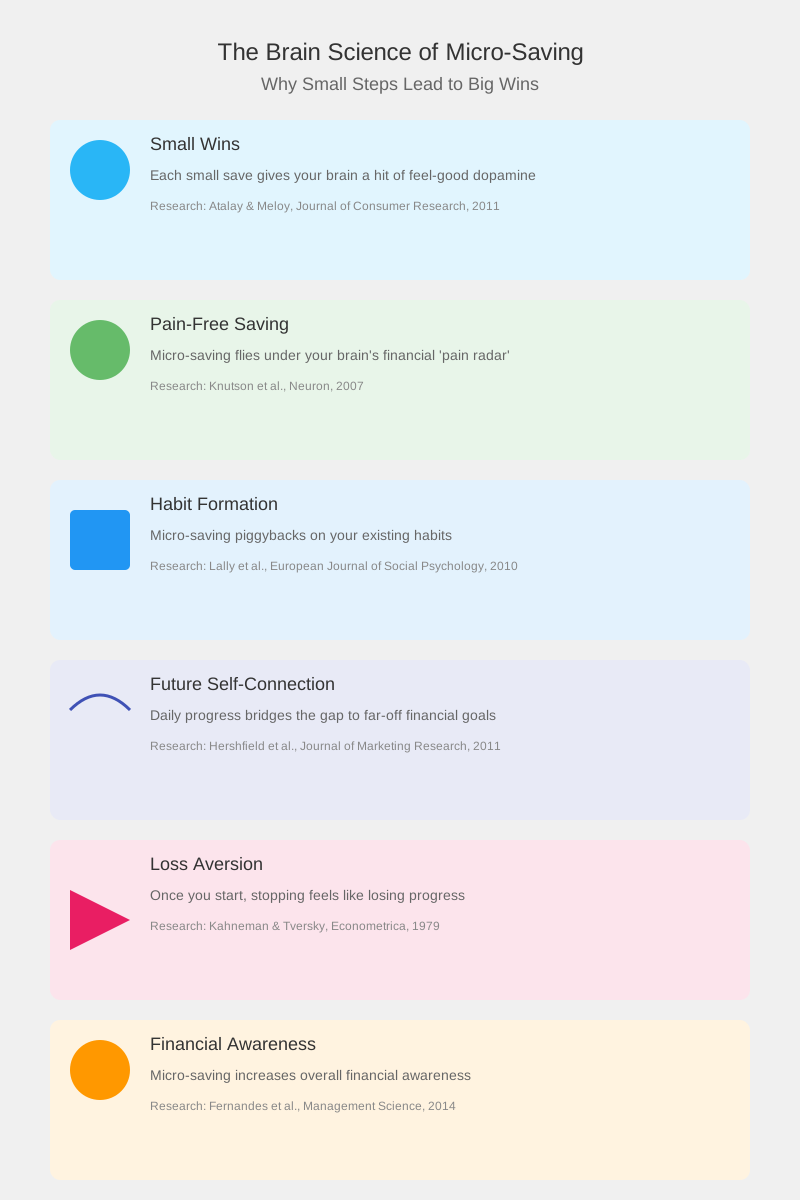
1. It’s All About the Small Wins

You know that feeling when you find a dollar in your old jeans? That little burst of joy? Micro-savings give you that feeling all the time!
Psychologists call this the “small wins” theory. Each time you save a little bit, your brain gets a hit of dopamine – the feel-good chemical that makes you want to do something again.
Dr. Karl Weick, an organizational psychologist, found that a series of small wins can lead to significant changes over time. It’s like building a brick wall – one brick at a time doesn’t seem like much, but before you know it, you’ve got a whole structure!
Research says: A study published in the “Journal of Consumer Research” found that people who focused on small, achievable goals were more likely to succeed in saving money than those who set big, daunting targets. You can read more about this in the study “The Benefits of Retail Therapy: Making Purchase Decisions Reduces Residual Sadness” by Atalay and Meloy (2011)
2. You Barely Feel the Pain

Let’s face it: saving a big chunk of money can feel like a real punch to the gut. But a few cents? You’ll hardly notice it’s gone!
This ties into a concept called “pain of paying.” Researchers have found that we feel pain when we part with our money. But micro-saving sneaks under our brain’s pain radar. It’s like plucking one hair versus waxing your whole leg – one you’ll barely notice, the other… ouch!
Research says: A study in the journal “Neuron” used fMRI scans to show that spending money activates the same brain regions as physical pain. But the key is that this effect is much smaller for tiny amounts – exactly what micro-saving uses!
3. It Fits Right Into Your Life
Micro-saving doesn’t ask you to change your whole life. It just piggybacks on what you’re already doing.
This is all about the power of habits. Our brains love routines – they’re efficient and comfortable. Micro-saving taps into your existing habits, making it feel natural and easy. It’s like adding a tiny stretch to your morning coffee routine – barely any extra effort, but it adds up!
Research says: A study in the “European Journal of Social Psychology” found that it takes an average of 66 days for a new behavior to become automatic. Micro-saving, by attaching to existing habits, can become automatic much faster.
4. It Makes the Future Feel Closer
Saving for retirement or a house down payment can feel like forever away. But micro-saving brings those big goals into your everyday life.
Psychologists talk about “temporal discounting” – the further away a reward is, the less value we give it. Micro-saving bridges this gap by making you progress daily toward those far-off goals. It’s like having a daily countdown to your vacation – it makes the wait more exciting and bearable!
Research says: A study in the “Journal of Marketing Research” found that people were more likely to save when they could visualize their future selves. Micro-saving helps you see your savings grow in real-time, making that future self feel more natural.
5. It Taps Into Loss Aversion
Here’s a fun fact: we hate losing way more than we like winning. Micro-saving uses this quirk of our brains to keep us on track.
Once you start seeing your micro-savings add up, the idea of stopping feels like losing all that progress. It’s like having a streak in a mobile game – you’ll do anything to keep it going!
Research says: Nobel Prize-winning psychologist Daniel Kahneman found that the pain of losing is psychologically about twice as powerful as the pleasure of gaining. This principle keeps people engaged with their micro-saving habits.
6. It Makes You More Money-Aware
When you start micro-saving, you suddenly start noticing all these little financial decisions you make daily.
This increased awareness is a psychological phenomenon called the Hawthorne effect. When we pay attention to something, we tend to improve it. By making you more aware of your small financial decisions, micro-saving often leads to better overall money habits.
Research says: A study in the “Journal of Financial Counseling and Planning” found that increased financial awareness led to better saving behaviors and reduced financial stress.
So there you have it! Micro-saving isn’t just a trendy way to save money – it’s a strategy that works with your brain, not against it. It gives you those small wins, flies under your financial pain radar, fits into your life, makes big goals feel achievable, uses your fear of losing, and makes you more money-savvy overall.
Everyone’s brain is a bit different, so what works best might vary from person to person. But give micro-saving a try – your future self (and brain) will thank you!
- How to Start a Micro-Savings
- How Micro-Saving Differs from Traditional Saving Methods
- 30-Day Micro-Saving Tips
References:
1. Atalay, A. S., & Meloy, M. G. (2011). The benefits of retail therapy: Making purchase decisions reduces residual sadness. Journal of Consumer Research, 38(3), 514-529.
2. Knutson, B., Rick, S., Wimmer, G. E., Prelec, D., & Loewenstein, G. (2007). Neural predictors of purchases. Neuron, 53(1), 147-156.
3. Lally, P., Van Jaarsveld, C. H., Potts, H. W., & Wardle, J. (2010). How are habits formed: Modelling habit formation in the real world. European Journal of Social Psychology, 40(6), 998-1009.
4. Hershfield, H. E., Goldstein, D. G., Sharpe, W. F., Fox, J., Yeykelis, L., Carstensen, L. L., & Bailenson, J. N. (2011). Increasing saving behavior through age-progressed renderings of the future self. Journal of Marketing Research, 48(SPL), S23-S37.
5. Kahneman, D., & Tversky, A. (1979). Prospect theory: An analysis of decision under risk. Econometrica, 47(2), 263-291.
6. Fernandes, D., Lynch Jr, J. G., & Netemeyer, R. G. (2014). Financial literacy, financial education, and downstream financial behaviors. Management Science, 60(8), 1861-1883.