By using this site, you agree to the Privacy Policy and Terms of Use.
Accept
FuturoQFuturoQFuturoQ
  • News
  • Personal Finance
  • Market
  • Calculators
    • 401K Calculator
    • Micro Savings Calculator
    • Online Free GST Calculator
    • PPF Calculator
    • Personal Loan EMI Calculator
    • Stock Average Calculator
  • More
    • About Us
    • Privacy Policy
Font ResizerAa
Font ResizerAa
FuturoQFuturoQ
Search
  • News
  • Personal Finance
  • Market
  • Calculators
    • 401K Calculator
    • Micro Savings Calculator
    • Online Free GST Calculator
    • PPF Calculator
    • Personal Loan EMI Calculator
    • Stock Average Calculator
  • More
    • About Us
    • Privacy Policy

Trending →

Microsoft’s Mustafa Suleyman Says AI Will Never Be Conscious, Urges Industry to “Stop Asking the Wrong Question”

By David Motley
November 3, 2025

Oil Extends Gains After OPEC+ Delays Q1 Output Hikes

By David Motley
November 3, 2025

China Factory Activity Slows in October, Misses Expectations: Private Survey

By David Motley
November 3, 2025

Nvidia CEO Jensen Huang Says AI Has Entered a “Virtuous Cycle” Driving Unstoppable Growth

By David Motley
November 3, 2025

6 Best Expense Tracker Apps 2025

By David Motley
October 31, 2025
Follow US
© Foxiz News Network. Ruby Design Company. All Rights Reserved.
Home » Personal Finance » Tariffs on Canada and Mexico Likely to Raise Consumer Costs, Expert Warns
Personal Finance

Tariffs on Canada and Mexico Likely to Raise Consumer Costs, Expert Warns

Last updated: March 5, 2025 11:31 am
By David Motley
Share
5 Min Read
Tariffs on Canada and Mexico Likely to Raise Consumer Costs, Expert Warns
SHARE
Highlights
  • President Donald Trump imposed a 25% tariff on imports from Canada and Mexico on Tuesday. He put a lower 10% tariff on Canadian energy, and another 10% levy on China.
  • Businesses are expected to raise prices for consumer goods as a result. Those effects are likely to be felt broadly across the economy.

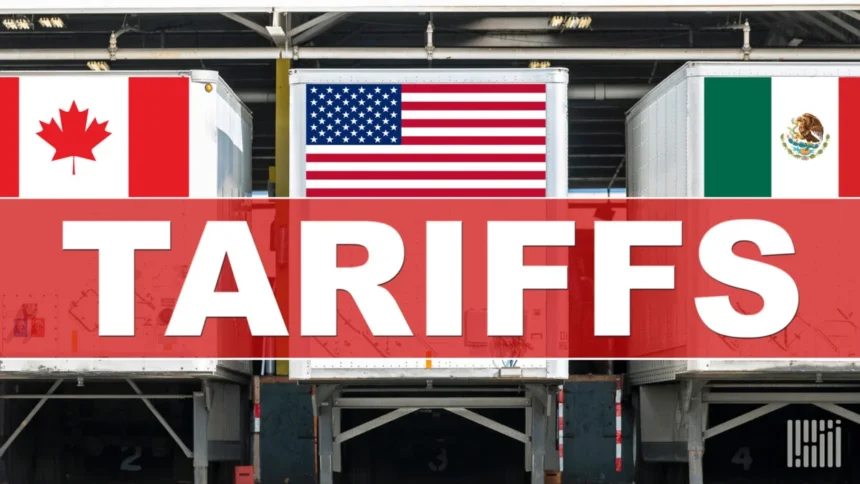
The 25% tariffs imposed by President Trump on imports from Canada and Mexico took effect Tuesday, with economists warning that they will likely lead to higher consumer prices—sometimes in unexpected ways. A lower 10% tariff was applied specifically to Canadian energy.

How Tariffs Impact Consumers

Tariffs are a tax on imported goods paid by U.S. companies that bring those products into the country. These additional costs are often passed on to consumers, increasing prices.

Some effects are straightforward—for example, fruits and vegetables from Mexico and oil from Canada will become more expensive. However, tariffs also create ripple effects throughout complex supply chains, making it difficult to predict the full extent of price increases.

Related

Automated Micro-Saving
Automated Micro-Saving: How to Build Wealth on Autopilot with Zero Effort
Best Expense Tracker Apps
6 Best Expense Tracker Apps 2025
How Micro-Saving Differs from Traditional Saving Methods

Unexpected Price Increases

Economist Travis Tokar from Texas Christian University explains that tariffs affect supply chains in ways that aren’t always obvious. For instance, while a fast-food chicken sandwich might not contain directly imported ingredients, the aluminum foil used in its packaging could be sourced from Canada or Mexico, increasing costs.

Another major concern is fuel prices. According to the Peterson Institute for International Economics, the U.S. imports nearly half of its foreign fuel from Canada. Since most consumer goods are transported by trucks running on refined oil, tariffs on Canadian crude oil could lead to higher transportation costs, making a wide range of products more expensive.

“Costs eventually have to go through the supply chain to the end consumer,” said Mary Lovely, a senior fellow at the Peterson Institute.

Tariffs Expected to Disrupt the Auto Industry

The automobile industry is expected to be one of the hardest-hit sectors by the new tariffs on Canada and Mexico, as North American supply chains are deeply interconnected.

How Tariffs Affect Car Prices

Even if a car is assembled in the U.S., many parts come from Canada or Mexico, meaning higher import costs for automakers. According to Travis Tokar, an expert in supply chain management, vehicles produced in Alabama or Michigan may still be impacted if essential components are sourced from outside the U.S.

A Bank of America Global Research report warns that major car manufacturers like Ford, General Motors, and Stellantis will likely see higher production costs due to their reliance on cross-border supply chains for parts and assembled vehicles.

Higher Car Prices & Insurance Costs

The impact on car prices could be significant. Investment bank Benchmark Co. estimated in February that tariffs on Canada and Mexico could add nearly $6,000 to the price of a new car. Additionally, rising vehicle costs will lead to higher car insurance premiums.

“This will be hugely disruptive for the auto industry,” said Douglas Irwin, an economics professor at Dartmouth College and author of Clashing over Commerce: A History of U.S. Trade Policy.

Retaliation Adds to Consumer Impact

Consumers won’t just feel the effects of U.S. tariffs—they will also be impacted by foreign retaliation, as Mexico, Canada, and China have already committed to countermeasures.

“You don’t put these kinds of tariffs in place without expecting retaliation, and that’s happening right now,” said Field, an economic analyst.

Canadian Prime Minister Justin Trudeau immediately announced a 25% tariff on C$30 billion worth of U.S. imports. An additional C$125 billion in U.S. goods will be taxed in 21 days. In response, Trump vowed to impose even more tariffs on Canada.

Additionally, Ontario will impose a 25% tax on electricity exports to Minnesota, Michigan, and New York, impacting 1.5 million homes, according to Doug Ford, the province’s leader.

China & Mexico Retaliate

China is also hitting back with up to 15% tariffs, specifically targeting U.S. agriculture. For example:

  • U.S. corn will face a 15% tariff
  • Soybeans will be taxed at 10%

Meanwhile, Mexican President Claudia Sheinbaum will announce her country’s retaliatory measures on Sunday.


  • Tesla Shares Slammed 8% Pre-Market as Profits Fall Short
  • Stock Average Calculator
Share This Article
Facebook Copy Link
Leave a Comment

Leave a Reply Cancel reply

Your email address will not be published. Required fields are marked *

Microsoft’s Mustafa Suleyman Says AI Will Never Be Conscious, Urges Industry to “Stop Asking the Wrong Question”
AI
Oil Extends Gains After OPEC+ Delays Q1 Output Hikes
Oil Prices and News
China Factory Activity Slows in October, Misses Expectations
China Factory Activity Slows in October, Misses Expectations: Private Survey
Economy
Nvidia CEO Jensen Huang Says AI Has Entered a “Virtuous Cycle” Driving Unstoppable Growth
Tech

You Might Also Like ↷

30-Day Micro-Saving Tips

Save More, Spend Less: 30-Day Micro-Saving Tips

October 5, 2024
How to Start a Micro-Savings habit: A Beginner's Guide

How to Start a Micro-Savings Habit: A Beginner’s Guide

February 16, 2025
Best Micro-Saving Apps

Best Micro-Savings Apps and Tools

June 26, 2025
50/30/20 Budgeting Rule

Micro-Saving with the 50/30/20 Budgeting Rule for Financial Success

July 26, 2025
  • Privacy Policy
  • About Us

Stay connected for a mix of engaging and insightful content designed to both inform and inspire. From breakthrough innovations in technology to the latest shifts in marketing and market trends, we’ll bring you stories, analysis, and ideas that help you stay ahead in a rapidly changing world. Whether you’re a professional looking for fresh perspectives or simply curious about where the future is headed, this space will keep you inspired and informed every step of the way!

FuturoQ FuturoQ

All Rights Reserved