
The United Arab Emirates has completed nearly half of a major new oil pipeline designed to bypass the Strait of Hormuz, according to Sultan Ahmed Al Jaber, chief executive of Abu Dhabi National Oil Company (ADNOC).
Speaking during an interview at the Atlantic Council on Wednesday, Al Jaber said the project is part of a broader effort to reduce dependence on vulnerable global energy chokepoints.
“Right now, too much of the world’s energy still moves through too few chokepoints,” he said.
New Pipeline to Expand Export Capacity
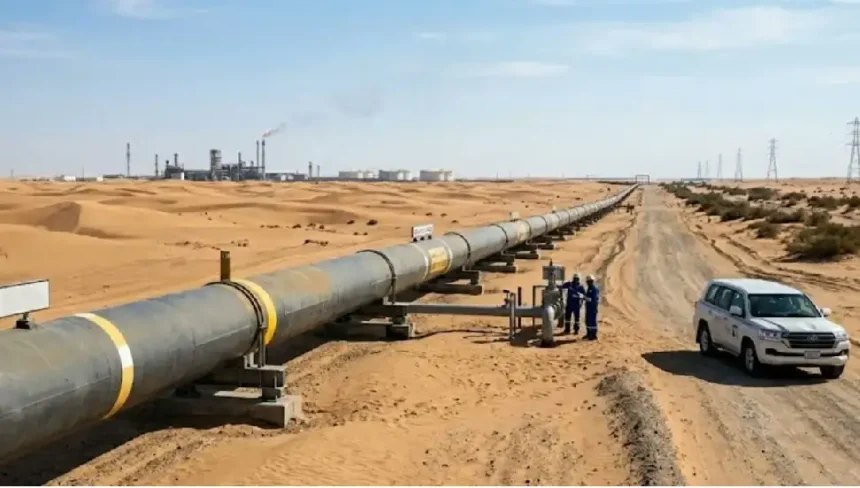
The new pipeline will significantly expand ADNOC’s export capabilities through Fujairah, a strategic port located on the Gulf of Oman outside the Strait of Hormuz. Once completed, the project is expected to double the company’s export capacity through the region.
Construction has reportedly accelerated following the ongoing conflict involving Iran and the resulting disruption to maritime trade routes. The pipeline is expected to become operational in 2027.
Hormuz remains one of the world’s most critical energy corridors, carrying a substantial portion of global oil and liquefied natural gas exports. Since early March, Iran’s blockade of the strait has severely disrupted exports from Gulf producers, including the UAE and neighboring Arab states.
The UAE has continued limited exports through an existing pipeline connected to Fujairah, which currently handles up to 1.8 million barrels of oil per day.
Energy Supply Crisis Deepens
Al Jaber described the blockade as the most severe energy supply disruption in modern history. According to ADNOC’s estimates, more than one billion barrels of oil supply have already been lost since the closure began.
The company also estimates that nearly 100 million additional barrels are removed from the market each week the strait remains blocked.
Even if tensions ease immediately, Al Jaber warned that restoring oil flows to 80% of normal capacity could take at least four months. Full normalization of exports may not occur until late 2026 or early 2027.
“This is not just an economic problem,” he said. “It sets a dangerous precedent once you accept that a single country can hold the world’s most important waterway hostage.”
Conflict Reshaping Global Energy Routes
The blockade began after large-scale military strikes carried out by the United States and Israel against Iran on February 28. The attacks reportedly killed several senior Iranian officials, including Supreme Leader Ali Khamenei.
The crisis has accelerated discussions about alternative export infrastructure across the Gulf region. Chris Wright recently said the strategic importance of the Strait of Hormuz could decline over time as Gulf nations invest in additional pipeline networks.
“This is a card you can play once,” Wright said regarding Iran’s blockade strategy, suggesting that energy exporters are likely to diversify routes to reduce future vulnerabilities.
Despite the current disruption, analysts expect Gulf nations to remain central players in global energy markets, with new infrastructure projects aimed at protecting exports from geopolitical instability.