
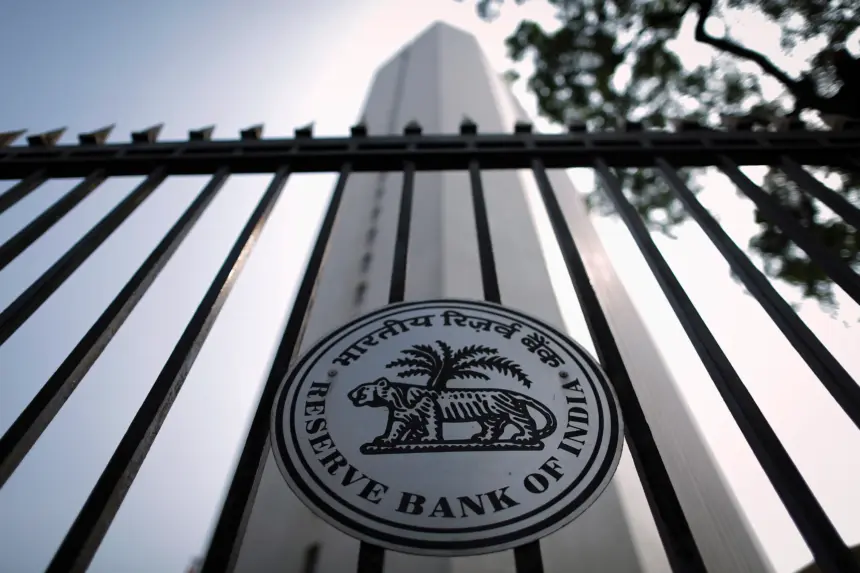
India’s central bank on Friday kept its benchmark policy rate unchanged, opting for caution amid a shifting global environment while drawing confidence from recently concluded trade agreements with the European Union and the United States.
The Reserve Bank of India maintained the policy repo rate at 5.25 per cent, in line with expectations from a Reuters survey of economists. The decision follows a cumulative 125 basis points of rate cuts delivered last year as the central bank sought to support growth.
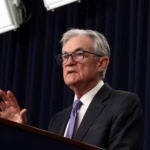
Explaining the pause, RBI Governor Sanjay Malhotra said global risks had increased, but successful trade negotiations had improved the overall outlook. He added that near-term prospects for domestic growth and inflation remained favourable.

Market participants interpreted the policy guidance as signalling an extended pause. Radhika Rao, senior economist and executive director at DBS Bank, said the central bank’s tone suggested rates were likely to stay unchanged for some time, with attention turning to how effectively earlier cuts are transmitted through the financial system.
Malhotra said the RBI would stay active on liquidity management, ensuring sufficient funds in the banking system to meet productive credit demand and support policy transmission. Economists expect open market operations in the coming quarters to help maintain adequate liquidity.
Focus shifts to bond markets and borrowing
According to Santanu Sengupta, chief India economist at Goldman Sachs, the RBI is likely to keep rates steady for at least a year. He said long-term bond yields may remain elevated as banks and insurance firms reduce purchases of government securities even as supply increases.
The pressure on bond markets is set to intensify after Finance Minister Nirmala Sitharaman announced that India plans to borrow 17.2 trillion rupees ($187 billion) in the financial year beginning April 1. The borrowing target represents an 18 per cent increase from the revised estimate for the current year and exceeded market expectations.
Trade developments reduce uncertainty
External risks flagged in earlier policy meetings have eased following a tariff announcement from the United States. Earlier this week, US President Donald Trump said Washington would lower tariffs on Indian exports to 18 per cent, down from 50 per cent. The higher tariffs had been among the steepest imposed on India and had strained trade ties between New Delhi and Washington.
Economists noted that the trade agreement removed a key downside risk to growth that the RBI had highlighted previously. Sengupta said there had been a small chance of a rate cut had the deal not materialised.
Growth and inflation outlook
India’s economic momentum remains strong. The government’s latest economic survey projects growth of 7.4 per cent in the fiscal year ending March 2026, followed by expansion of 6.8 to 7.2 per cent the next year, reinforcing India’s position as the world’s fastest-growing large economy.
Inflation pressures also appear muted. Consumer price inflation rose to 1.33 per cent in December from 0.71 per cent a month earlier, still well below the central bank’s comfort threshold. The RBI expects inflation to average 2.1 per cent in the current financial year, marginally higher than its previous estimate.
In a statement, the central bank said food supply conditions remain favourable and core inflation is expected to stay within range, excluding volatility driven by precious metal prices.
With growth resilient, inflation contained and external risks easing, policymakers appear comfortable holding rates steady while monitoring how previous easing measures filter through the economy.