
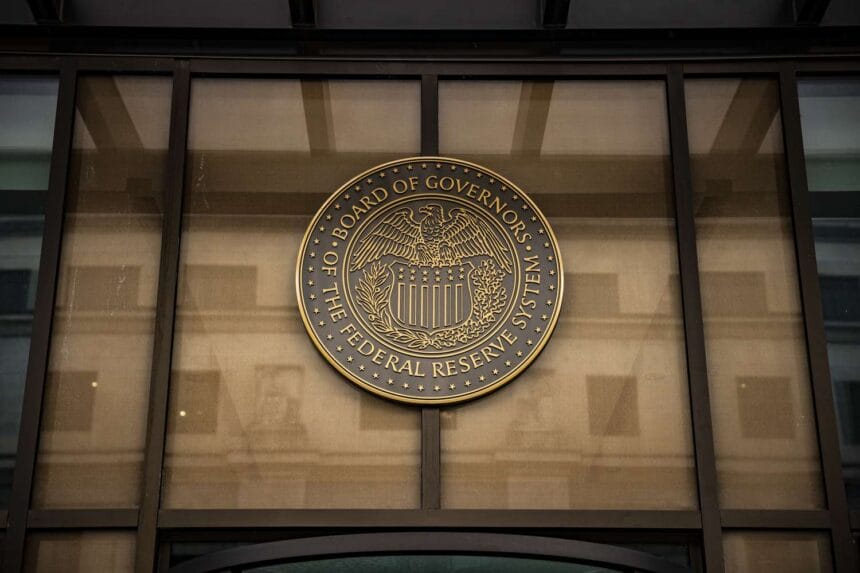
The Federal Reserve is heading into 2026 facing an unusual mix of economic uncertainty, internal debate, and a potential leadership transition that could shape U.S. monetary policy for years to come.
Economists broadly expect the central bank to lower interest rates at least once or twice next year, following signs that the labour market is losing momentum. November’s jobs report showed unemployment rising to 4.6 per cent, with employers adding just 64,000 positions — a sharp slowdown compared to earlier in the year. Still, the path ahead is far from straightforward.
Complicating matters is President Donald Trump’s upcoming decision on who will lead the Fed once Jerome Powell’s term as chair expires in May. While the chair plays a powerful role in shaping debate, analysts caution that no single individual controls the outcome.

“The Federal Reserve is a committee-driven institution, not a one-person operation,” wrote Deutsche Bank chief U.S. economist Matthew Luzzetti, noting that policy decisions depend on consensus within the Federal Open Market Committee (FOMC).
A Divided Committee
Recent history suggests that consensus may be hard to achieve. In 2025, Powell faced resistance from more hawkish members of the FOMC even as the Fed implemented three rate cuts. That dynamic is expected to continue next year, especially as several vocal inflation hawks rotate into voting roles.
At the same time, the broader economy is sending mixed signals. While hiring has softened, consumer spending remains resilient, and heavy investment in artificial intelligence continues to support overall growth. That strength could weaken the case for aggressive rate reductions by mid-2026.
Andrew Brenner, vice chairman at NatAlliance Securities, summed up the challenge succinctly: “The Fed is a process, not a one-man show.”
Who Will Lead the Fed?
Attention is now turning to who Trump may nominate as the next Fed chair. Among the names circulating are current Fed Governor Chris Waller, former Fed Governor Kevin Warsh, and White House economic adviser Kevin Hassett. Prediction markets currently view Hassett as the frontrunner.
Hassett’s close ties to Trump have raised concerns among investors about political pressure for deeper rate cuts. However, some economists argue those fears may be overstated, describing him as pragmatic and aware of the importance of preserving the Fed’s independence.
Any nominee will need Senate confirmation, where Republicans hold a narrow majority. Historically, Fed chair confirmations have drawn broad bipartisan support, suggesting that the process may be less contentious than some fear.
Potential for More Appointments
Beyond the chairmanship, Trump may have additional opportunities to reshape the Fed. Several seats on the seven-member Board of Governors could become available next year, providing the administration with an opportunity to expand its influence.
However, the Fed’s structure includes an important counterbalance: regional Federal Reserve bank presidents. These officials rotate into voting roles on the FOMC and provide local economic perspectives. Recently, the Fed approved its appointments for another five-year term, a move that analysts say strengthens the perception of institutional independence.
Powell’s Next Move
Another open question is Jerome Powell’s own future. While his term as chair ends in 2026, his term as a Fed governor runs through 2028. He could choose to remain on the board, a rare move that last occurred more than seven decades ago. Such a decision could be seen as an effort to reinforce continuity — or, critics argue, could risk appearing political.
An Uncertain Year Ahead
Taken together, leadership uncertainty, internal divisions, and a mixed economic outlook point to a volatile year for U.S. monetary policy. For consumers, that could mean uneven changes in borrowing costs. For investors, it adds another layer of unpredictability.
As 2026 approaches, one thing is clear: the direction of interest rates will depend not only on economic data, but also on how a changing Federal Reserve navigates its own internal and political challenges.